
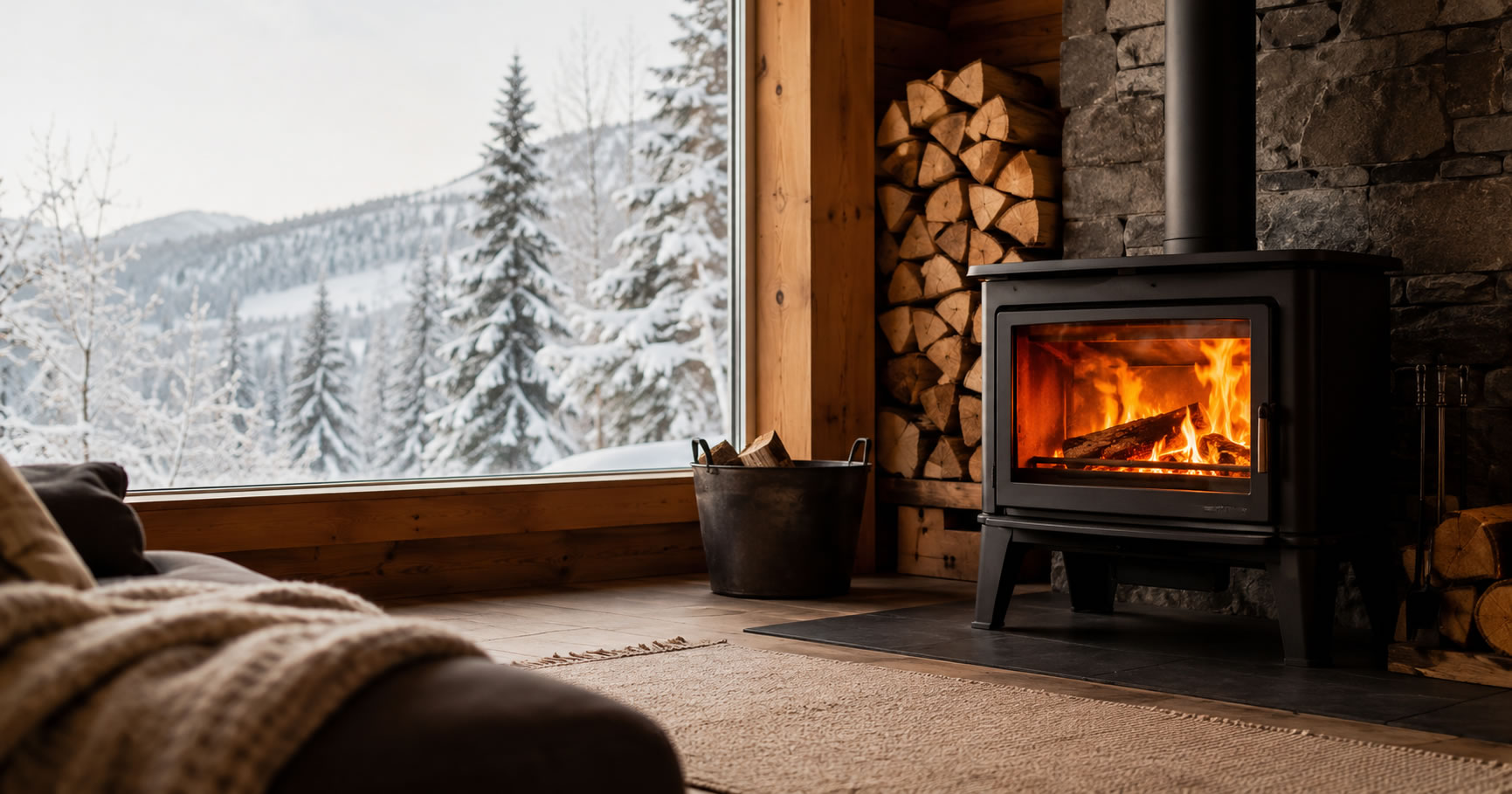
Why Firewood Is a Good Choice for Heating
For generations, Canadians have relied on firewood to keep their homes warm through long, cold winters. Even with modern heating systems becoming more common, wood heat continues to be an attractive option for homeowners, cottages, farms, camps, workshops, and rural properties across the country.
When used responsibly and burned in an efficient appliance, firewood can provide dependable heat, greater energy independence, and the unmistakable comfort of a real wood fire.
If you’re considering heating with wood, our Buying Firewood Guide is a great place to start. It’s a great primer that focuses on the benefits of heating with firewood.
Here are some of the reasons firewood remains such a practical heating choice.
1. Firewood Can Be a Local Source of Energy
One of the biggest advantages of heating with firewood is that the fuel can often come from relatively close to home.
Unlike heating fuels that may travel hundreds or thousands of kilometres before reaching the consumer, firewood is frequently harvested, processed, and sold within the same region where it will ultimately be burned.
Buying locally can help support:
- Local firewood producers
- Forestry and tree-service businesses
- Farmers and rural landowners
- Local trucking and delivery companies
- Small businesses within your community
At CanFirewood, we believe in a simple idea:
Buy Local. Burn Local.
Finding a reputable supplier close to home can reduce transportation distances while keeping more of your heating dollars within your local community.
2. Wood Heat Provides Greater Energy Independence
Firewood can give homeowners another option beyond relying entirely on electricity, propane, natural gas, or heating oil.
For rural homeowners in particular, having a wood stove or fireplace can provide an important secondary source of heat.
During winter storms or power outages, some wood-burning appliances can continue producing heat even when the electrical grid is unavailable.
That extra level of independence can provide valuable peace of mind during a Canadian winter.
For many homeowners, wood heat doesn’t necessarily need to replace their primary heating system either.
A wood stove can supplement another heating source and reduce how frequently a furnace, boiler, or electric heating system needs to operate.
3. A Wood Fire Produces Powerful, Comfortable Heat
There is something different about the heat produced by a wood stove.
Modern wood stoves can provide strong radiant heat that warms the surrounding room, walls, furniture, and people rather than simply heating the surrounding air.
For homeowners who spend a lot of time in a central living area, a wood stove can create a particularly comfortable environment during cold winter weather.
And, of course, there is another benefit that is difficult to measure:
A wood fire simply feels good.
The warmth, glow, and sound of a fire can turn a cold winter evening into one of the most comfortable places in the house.
4. Firewood Can Make Use of a Renewable Resource
Wood is a renewable resource when forests and woodlots are managed responsibly.
Trees naturally regenerate, and responsible forestry practices can help maintain healthy forests while providing wood products and energy.
Firewood can also make productive use of wood that may otherwise have limited commercial value.
Depending on the supplier, firewood may come from sources such as:
- Forestry operations
- Woodlot management
- Tree removals
- Storm-damaged trees
- Land clearing
- Arborist operations
- Lower-grade hardwood unsuitable for lumber
Using suitable wood for heating can help make use of more of the tree rather than allowing potentially valuable material to go unused.
Buying from suppliers close to where you live can also help reduce unnecessary transportation. Read more about the idea behind Buy Local / Burn Local.
5. You Can Often Buy Firewood Directly From Local Producers
Firewood is somewhat unique among heating fuels because consumers can often purchase it directly from the people who produce it.
Depending on where you live, suppliers may offer:
- Full cords
- Face cords
- Bush cords
- Loose-thrown firewood
- Bulk bags
- Smaller bundles
- Pickup
- Home delivery
- Stacking services
That flexibility allows homeowners to choose a supplier and ordering method that fits their property, storage space, heating requirements, and budget.
If you’re new to purchasing firewood, it’s important to understand exactly how the wood is being measured and sold before comparing prices.
Our Firewood Measurements Guide explains cords, face cords, loose-thrown measurements, and other common ways firewood is sold.
Firewood advertised at the lowest price isn’t always the best value if the quantity, species, moisture content, or quality isn’t comparable.
6. Properly Seasoned Firewood Burns Efficiently
Good firewood isn’t simply wood that has been cut and split.
Moisture content makes an enormous difference.
Freshly cut — or green — wood contains a significant amount of moisture. Before that wood can burn efficiently, much of the water needs to evaporate.
Properly seasoned firewood generally:
- Ignites more easily
- Produces more useful heat
- Creates less smoke
- Burns more efficiently
- Helps reduce excessive creosote buildup
For most household wood-burning applications, firewood should generally have a moisture content of 20% or less when measured correctly on a freshly split face of the wood.
That is why asking your supplier about seasoning and moisture testing is important.
A moisture meter is also an inexpensive tool for homeowners who regularly burn firewood.
Want to understand the difference between seasoned, green, and kiln-dried wood? Visit our Seasoning & Moisture Guide.
7. Different Firewood Species Give You Options
Not all firewood behaves the same way.
Different species have different densities, burning characteristics, heat output, and availability.
Dense hardwoods such as:
- Sugar maple
- Beech
- Oak
- Ironwood
can provide long-lasting fires and excellent heat when properly seasoned.
Other species may ignite more quickly and can be useful when starting fires or when you want faster heat.
The “best” firewood isn’t always one specific species.
Availability, price, moisture content, stove type, and how you plan to use the firewood all matter.
In many cases, properly seasoned local firewood is more important than chasing one particular species.
See our complete Firewood Species Guide to compare popular Canadian firewood species and their burning characteristics.
8. Firewood Can Be Stored for Future Use
Unlike some forms of energy, properly stored firewood can be purchased ahead of time and kept on your property until you need it.
That means homeowners can prepare well before winter arrives.
Buying earlier in the year can also give firewood additional drying time before the heating season begins.
Good firewood storage should:
- Keep the wood off the ground
- Allow air to circulate
- Protect the top of the pile from excessive rain and snow
- Avoid completely wrapping the wood in plastic
- Keep large quantities of firewood safely away from the home when appropriate
Preparing your firewood supply before the first cold snap also means you aren’t scrambling to find dry wood when demand is highest.
For practical advice on stacking, storing, and safely using your firewood, visit our Storage & Burning Guide.
9. Modern Wood Stoves Are Far More Advanced Than Older Appliances
Wood heating technology has changed substantially.
Modern certified wood stoves are designed to burn fuel much more efficiently than many older stoves and fireplaces.
When properly installed and operated with dry firewood, modern appliances can extract considerably more usable heat from each piece of wood while reducing smoke and emissions.
The appliance matters.
So does the fuel.
Even an excellent wood stove will perform poorly when loaded with wet firewood.
The best results come from combining:
A properly installed appliance + dry firewood + good burning practices.
10. Firewood Encourages You to Think About Where Your Energy Comes From
For most forms of household energy, the fuel source can feel invisible.
You turn up the thermostat and heat appears.
Firewood is different.
You see the fuel.
You move it.
You stack it.
You protect it from the weather.
You learn which species burn best.
You quickly understand the difference between dry wood and wet wood.
That connection can make homeowners much more aware of how much energy they are actually consuming.
There is something satisfying about looking at a properly stacked firewood pile before winter and knowing part of your heating supply is already sitting on your property. This is one of the most overlooked benefits of heating with firewood.
Is Firewood Right for Every Home?
Not necessarily.
Heating with firewood requires more involvement than simply adjusting a thermostat.
Homeowners need to consider:
- Firewood storage
- Chimney maintenance
- Appliance installation
- Local regulations
- Insurance requirements
- Proper burning practices
- Physical handling of the wood
- Reliable access to dry firewood
Wood-burning appliances should always be professionally installed where required, and chimneys and venting systems should be properly inspected and maintained.
But for homeowners who are prepared for the additional work, firewood can provide an extremely rewarding source of heat.
The Quality of Your Firewood Matters
If you’re considering heating with wood, don’t choose a supplier based on price alone.
Ask questions.
Find out:
- What species are included?
- How is the firewood measured?
- Is the wood seasoned?
- Has the moisture content been tested?
- What length are the pieces cut?
- Is delivery included?
- Is stacking available?
- Where does the firewood come from?
A good firewood supplier should be able to clearly explain what you’re buying.
Find Firewood Near You
Whether you heat your entire home with wood, use a wood stove to supplement another heating system, or simply enjoy occasional fires throughout the winter, the quality of your firewood makes a difference.
CanFirewood makes it easier to discover firewood suppliers serving your community and learn what to look for before ordering.
Find Firewood Near You and connect with local suppliers serving your area.
Find local firewood. Ask the right questions. Burn dry wood. Support local suppliers.